

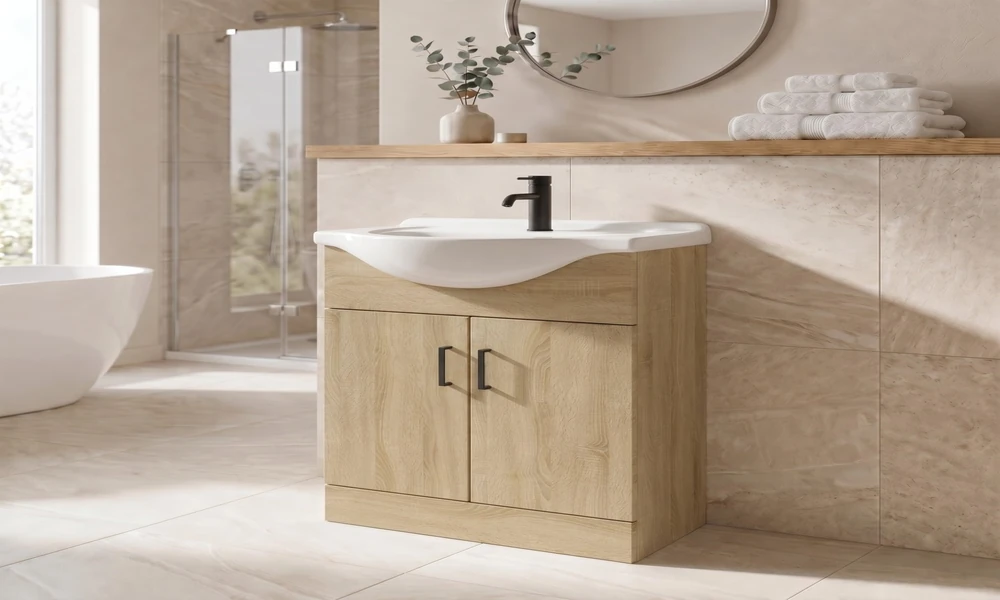
Bathroom furniture fails at its edges, rarely at its face. Steam, splashes and wiped spills attack joints and seams first. That weakness shapes the choice between timber and paint. Well-sealed oak vanity units offer dense grain that resists daily wear. Painted cabinets counter with colour freedom and crisp lines. Moisture behavior, cleaning, repairs and style each tip the balance differently.
Moisture Tests Every Material Differently
Solid oak absorbs humidity slowly, then releases it over hours. This gradual movement suits a room that steams twice a day. Painted units rely on MDF cores beneath their coating. Once paint chips near a hinge, water reaches that core. Swelling follows, and swollen board never shrinks back. Seal quality matters more than species or shade.
Which Finish Handles Daily Cleaning Better?
Bathroom sprays hit both surfaces several times each week. The differences show quickly:
- Oak grain hides fingerprints and faint water spots.
- Matte paint holds smudges until someone wipes them.
- Bleach-based cleaners can dull a lacquered oak sheen.
- Gloss paint shows every streak under bright mirror lights.
Repairs Favor Timber Over Coated Boards
A scratched oak door can be sanded and re-oiled. By evening, the mark has vanished. Paint behaves differently. Touch-ups leave visible brush edges and slight tone shifts. Over two decades, oak vanity units reward this simple renewal cycle.
Does Paint Offer Greater Design Flexibility?
Yes, and that advantage is real. Sage, navy or charcoal can match tiles exactly. Owners can repaint when tastes shift, without replacing carcasses. Oak brings a fixed warm tone, though stains can darken it. Against white marble or brushed brass, honey grain still looks right.
What Hidden Factors Affect Long-Term Performance?
Several details never make it into showroom brochures:
- Extractor fans protect both materials.
- Oak tannins stain near bare steel.
- Sealed MDF edges resist swelling.
- Wall-hung units dodge floor splashes.
- Solid oak weighs noticeably more.
The Hinge Edge Decides Everything
That chipped corner near a hinge tells the real story. Bathroom furniture rarely fails because of style. Neglected seals cause most early replacements. Sealed painted edges can outlast poorly oiled oak. So the sharper question concerns habits, not materials. Owners willing to re-oil once a year gain most from oak. Those who prefer wipe-and-forget care belong with paint.
FAQs
Is solid oak better than oak veneer for bathrooms?
Solid oak tolerates sanding and repeated refinishing far better. Veneer performs well too, provided its edges stay fully sealed.
How often should an oak vanity be re-oiled?
Once or twice a year suits most ventilated bathrooms. Dull, thirsty patches near the basin signal it needs attention sooner.
Can painted bathroom cabinets be repainted at home?
Yes, after light sanding and a bonding primer coat. Moisture-resistant enamel gives the toughest, longest-lasting result.
Which option works best in a small, unventilated bathroom?
Neither thrives without airflow, so fitting an extractor comes first. Once air moves, sealed oak forgives lingering damp more readily.
